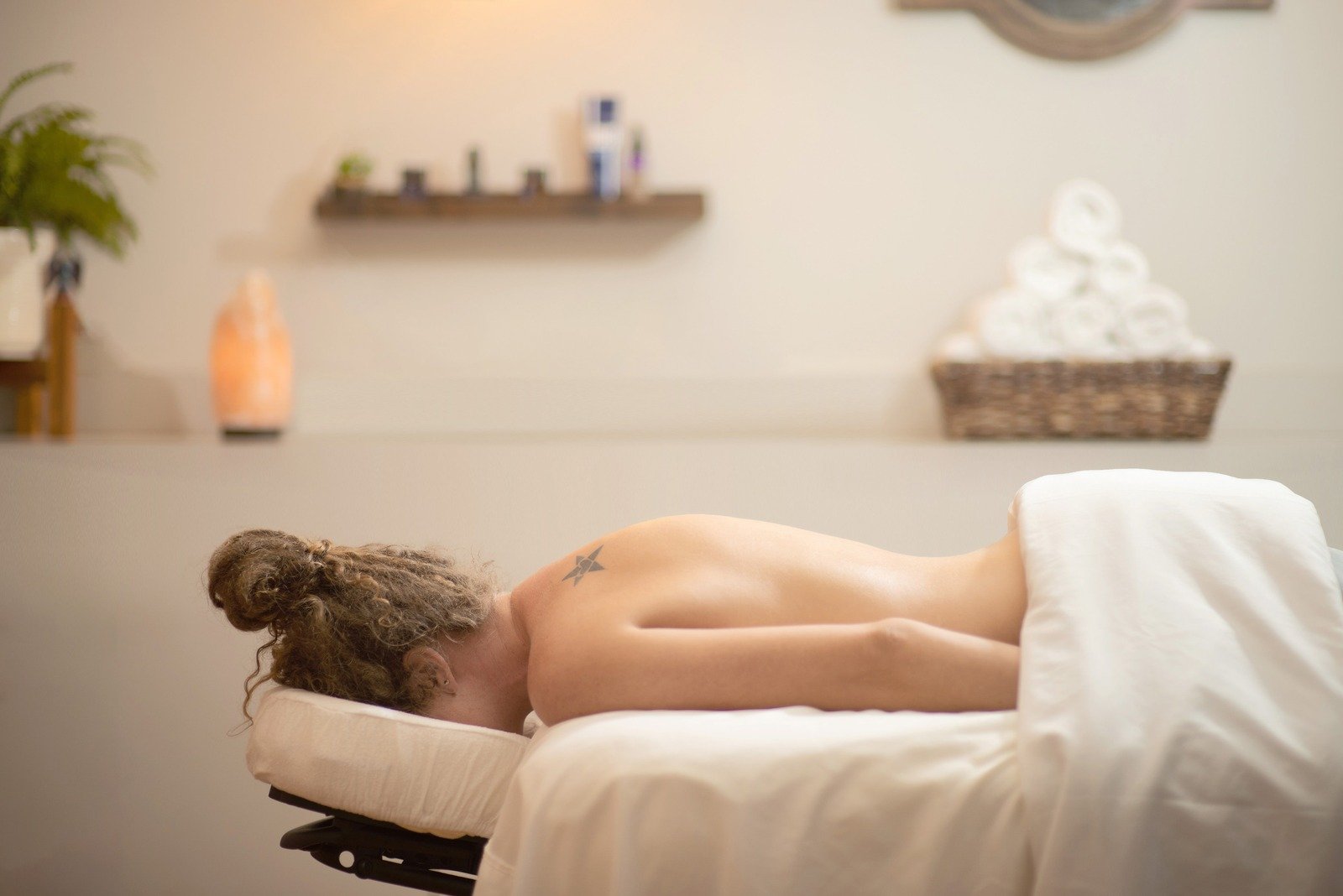

TMJ facial massage at Soothe and Sage in Spokane WA

Facial Massage for TMJ

Soothe & Sage

Release the Jaw Tension You Didn't Know You Were Carrying

Finally, Relief

If you wake with headaches, catch yourself clenching during the day, hear clicking when you chew, or feel pain radiating from your jaw to your temple and ear — your jaw muscles are likely locked in chronic tension that's compressing your temporomandibular joint. TMJ dysfunction affects an estimated 12% of the population at any given time, yet most people don't realize that the primary cause is muscular, not skeletal — and that skilled massage can provide dramatic relief by releasing the muscles that are creating the compression.

The masseter is the strongest muscle in the human body by weight, capable of generating over 150 pounds of force during clenching. When chronic stress, anxiety, or unconscious habits activate this muscle persistently — during sleep (bruxism), during work (stress clenching), during exercise (jaw bracing) — it develops hypertrophy and trigger points that create constant compression on the TMJ. This compression causes the clicking, popping, limited opening, and pain that characterize TMJ dysfunction. The temporalis muscle across your temple follows the same pattern, contributing headaches that wrap from the jaw to the forehead.

Professional treatment targets the entire jaw muscle complex. Deep tissue release of the masseter along the jaw angle addresses the primary source of clenching force. Temporalis work across the temple reduces the referred headache pattern. Trigger point therapy in the pterygoid muscles (which sit deeper and control jaw opening and lateral movement) eliminates the deep, aching jaw pain and ear fullness that many TMJ sufferers experience. And release of the cervical muscles — SCM, upper trapezius, suboccipitals — addresses the neck tension that often accompanies and perpetuates jaw dysfunction.

The relationship between neck tension and TMJ is significant and often overlooked. Forward head posture (from screen use, driving, or postural habits) pulls the mandible backward, compressing the posterior joint space. Upper trapezius and SCM tension alters the mechanics of jaw opening. Suboccipital tightness refers pain to the same areas as TMJ dysfunction. A comprehensive approach that addresses both the jaw and cervical spine produces far better results than treating the jaw in isolation.

Red light therapy supports TMJ recovery by reducing inflammation in the joint capsule, accelerating healing of irritated tissue, and relieving the muscle soreness that follows deep tissue work. At Soothe & Sage, every session includes full-body red light therapy at no extra charge — meaning your TMJ treatment includes anti-inflammatory support automatically. Combined with warm salt stones that relax the jaw muscles before deep work and steamed towels that soothe the area afterward, each session provides complete TMJ care at one flat rate.

Masseter Release

Deep tissue release of the body's strongest muscle reduces clenching force, decompresses the TMJ, and eliminates the jaw pain and fatigue that builds from unconscious grinding.

Headache Relief

Temporalis and pterygoid trigger points refer pain as headaches wrapping from jaw to temple to forehead. Releasing these muscles eliminates the source of TMJ-related headaches.

Neck & Posture Connection

Cervical tension from forward head posture compresses the posterior TMJ space. Treating the neck alongside the jaw produces lasting results that jaw-only treatment cannot.

Anti-Inflammatory Support

Red light therapy reduces inflammation in the joint capsule and surrounding muscles, supporting healing between sessions. Warm salt stones relax muscles before deep work. All included free.

Jordan Crogan L.M.T., massage therapist in Spokane WA

Written by Jordan Crogan, L.M.T., owner of Soothe & Sage Massage in Spokane's Garland District. Jordan has over a decade of hands-on massage therapy experience and provides customized sessions for deep tissue work, prenatal massage, lymphatic drainage, cupping, and restorative bodywork.

Your Jaw Deserves to Rest

TMJ pain is muscular — and muscles respond to skilled release. Every session includes jaw work, neck treatment, red light therapy, salt stones, steamed towels, and aromatherapy at one flat rate. No add-on fees, ever.

BOOK YOUR TMJ MASSAGE
Stop Clenching. Start Healing.

60-minute sessions are $135 and 90-minute sessions are $165. Every session includes red light therapy, salt stones, steamed towels, aromatherapy, and warm packs — all at one flat rate. No add-on fees, ever.

BOOK YOUR APPOINTMENT HERE

Facial Massage for TMJ FAQ

Can massage help TMJ pain?
Yes, massage is one of the most effective conservative treatments for TMJ dysfunction. The primary cause of TMJ pain is muscular — the masseter, temporalis, medial and lateral pterygoid muscles become hypertonic from clenching and grinding, creating compression of the temporomandibular joint, restricted jaw opening, clicking, pain, and referred headaches. Professional massage releases these muscles, reduces compression on the joint, and restores normal range of motion.
What muscles cause TMJ pain?
The primary muscles involved in TMJ dysfunction are the masseter (the strongest muscle by weight in the body — responsible for jaw clenching force), the temporalis (covers the side of the skull and assists in clenching), the medial pterygoid (deep jaw elevator that creates grinding force), and the lateral pterygoid (controls jaw opening and side-to-side movement). When these muscles develop chronic tension from clenching or grinding, they compress the TMJ, restrict movement, and create pain that radiates to the temples, ears, and teeth.
How does facial massage treat TMJ?
Treatment involves deep tissue release of the masseter (externally along the jaw angle), the temporalis (across the temple), trigger point therapy in the pterygoid muscles (which refer pain deep into the jaw and ear), and release of the cervical muscles that contribute to jaw tension (SCM, upper trapezius, suboccipitals). The approach reduces the muscular compression on the joint, eliminates trigger points that create referred pain, and restores balanced muscle tone for pain-free jaw movement.
How often should I get massage for TMJ?
For active TMJ pain, weekly sessions for 4-6 weeks typically provide significant relief as the muscles progressively release their chronic tension patterns. After the acute phase resolves, maintenance sessions every 2-3 weeks help prevent re-accumulation of tension — especially important if you have a clenching or grinding habit that continues recreating the problem. Many clients find that consistent massage eliminates the need for mouth guards or other interventions.
Does TMJ massage hurt?
The masseter and temporalis can be tender when they're holding significant tension — similar to how a tight shoulder feels during deep tissue work. The pressure is always within your comfort level and communicated openly. Most clients describe the sensation as 'good pain' — intense but clearly therapeutic — followed by immediate relief once the muscle releases. By the end of the session, jaw opening is typically easier, pain is reduced, and the face feels lighter and more relaxed.
Visit Soothe & Sage in the Garland District

1411 W. Garland Ave, Suite A • Spokane, WA 99205
Three blocks west of the Garland Theater • Free lot parking available
Phone/Text: 509 263 6099
@SootheandSageMassage on Instagram

Call / Text Book Now