
Police officers, firefighters, paramedics, and EMTs carry their communities — sometimes literally. The physical demands of first responder work are unlike any other profession: explosive bursts of maximum exertion during calls, heavy gear worn for entire shifts, sustained hypervigilance that never fully turns off, irregular schedules that destroy sleep patterns, and the cumulative emotional weight of responding to emergencies, trauma, and crisis day after day. Spokane's first responders protect this community through everything from routine traffic stops to structure fires to medical emergencies, and their bodies bear the full cost of that service.
The physical toll is specific and severe. Police officers carry 20-30 pounds of duty belt equipment that creates asymmetric loading on the hips and low back for every shift. The weight compresses the lumbar spine, tilts the pelvis, and creates chronic tension patterns that worsen with every hour of wear. Patrol car seats compound the problem — hours of seated hip flexion in a vehicle that offers minimal lumbar support, followed by explosive exits from the car that demand instant transition from compressed sitting to full physical performance. Firefighters carry even heavier gear and operate in extreme environments, creating demands on the respiratory system, shoulders, back, and legs that few other professions match. EMTs and paramedics lift and carry patients in awkward positions, often under time pressure and in confined spaces, creating the exact conditions that produce acute injury on top of chronic strain.
The neurological toll may be even more significant. First responder training deliberately calibrates the nervous system for threat detection and rapid response — the ability to go from zero to full adrenaline instantly. This hypervigilance is essential on duty but devastating off duty. The nervous system struggles to downshift from sustained alert mode, creating the sleep disruption, muscle guarding, elevated blood pressure, and emotional exhaustion that first responders know as their baseline. Regular massage activates the parasympathetic nervous system through sustained therapeutic touch, providing the neurological signal that it's safe to stand down — something that willpower alone often can't accomplish.
Shift work adds another layer of damage. Rotating schedules and overnight shifts disrupt circadian rhythms, suppress melatonin production, elevate cortisol at the wrong times, and prevent the deep restorative sleep that tissue repair requires. Massage supports better sleep by boosting serotonin (the precursor to melatonin) and reducing the cortisol that keeps the mind racing when the body desperately needs rest.
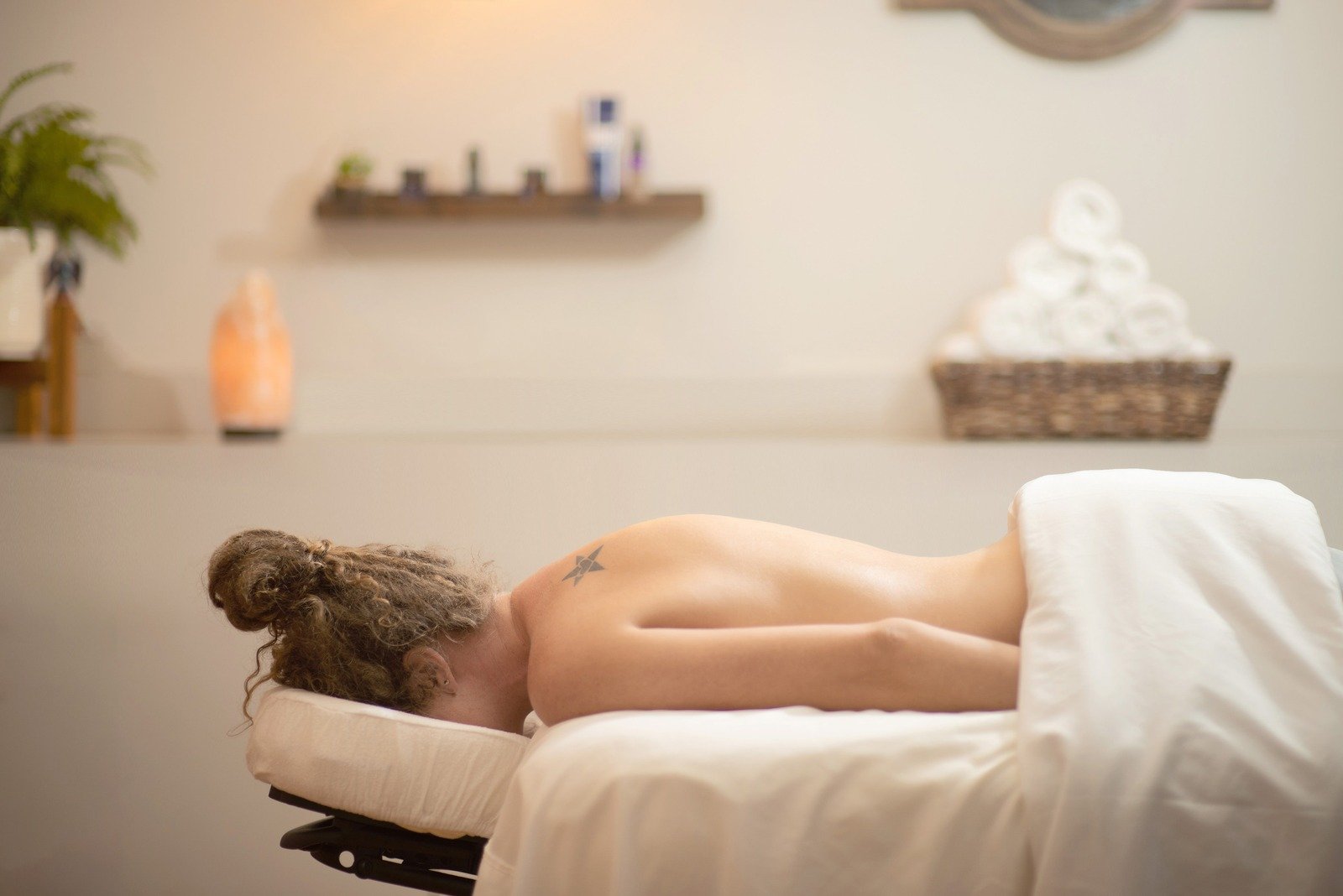
Every session at Soothe & Sage includes cupping, red light therapy, salt stones, steamed towels, aromatherapy, and warm packs at one flat rate with no add-on fees. You protect this community — let us take care of you.