
Spokane gardeners know the joy of watching a yard come alive after winter — and they know the price their bodies pay for every hour spent making it happen. From the first spring cleanup to the last fall leaf raking, maintaining a yard and garden demands a physical workload that most people dramatically underestimate. Gardening doesn't look like heavy labor, but the sustained kneeling, bending, reaching, digging, pulling, and carrying that it requires creates cumulative physical demands that rival many manual labor jobs — and the people doing it often haven't warmed up, don't take breaks, and push through discomfort because there's always one more bed to weed, one more section to mulch, one more row to plant.
The knees take tremendous punishment from gardening. Sustained kneeling compresses the knee joint, overloads the patellar tendon, and creates inflammatory conditions that become more painful with each garden session. Even with knee pads, the sustained flexed position tightens the quadriceps, shortens the hip flexors, and creates the stiffness that makes standing up after an hour of weeding feel like your joints have aged a decade. The transition from kneeling to standing — repeated dozens of times per gardening session — loads the knees and hips with every repetition.
The low back is the other primary victim. Bending forward to plant, weed, and tend ground-level beds creates sustained flexion loading on the lumbar spine. Digging, shoveling, and turning soil demand repeated bending and twisting under load — the exact movement pattern that creates the most strain on the intervertebral discs. Raking involves sustained asymmetric loading as one side of the body pulls while the other stabilizes, creating rotational strain that accumulates across hours of work. Even watering with a heavy hose creates sustained grip and arm fatigue while the body manages the weight and resistance of the hose across the yard.
The hands and forearms develop their own overuse patterns. Pruning, clipping, pulling weeds, and gripping tools for hours creates forearm extensor and flexor fatigue, develops trigger points in the hand muscles, and can aggravate or create conditions like tennis elbow and carpal tunnel syndrome. The sustained grip demand is particularly hard on hands that spend the work week on keyboards and mice — the muscles switch from fine motor precision to sustained power grip without adequate conditioning for either extreme.
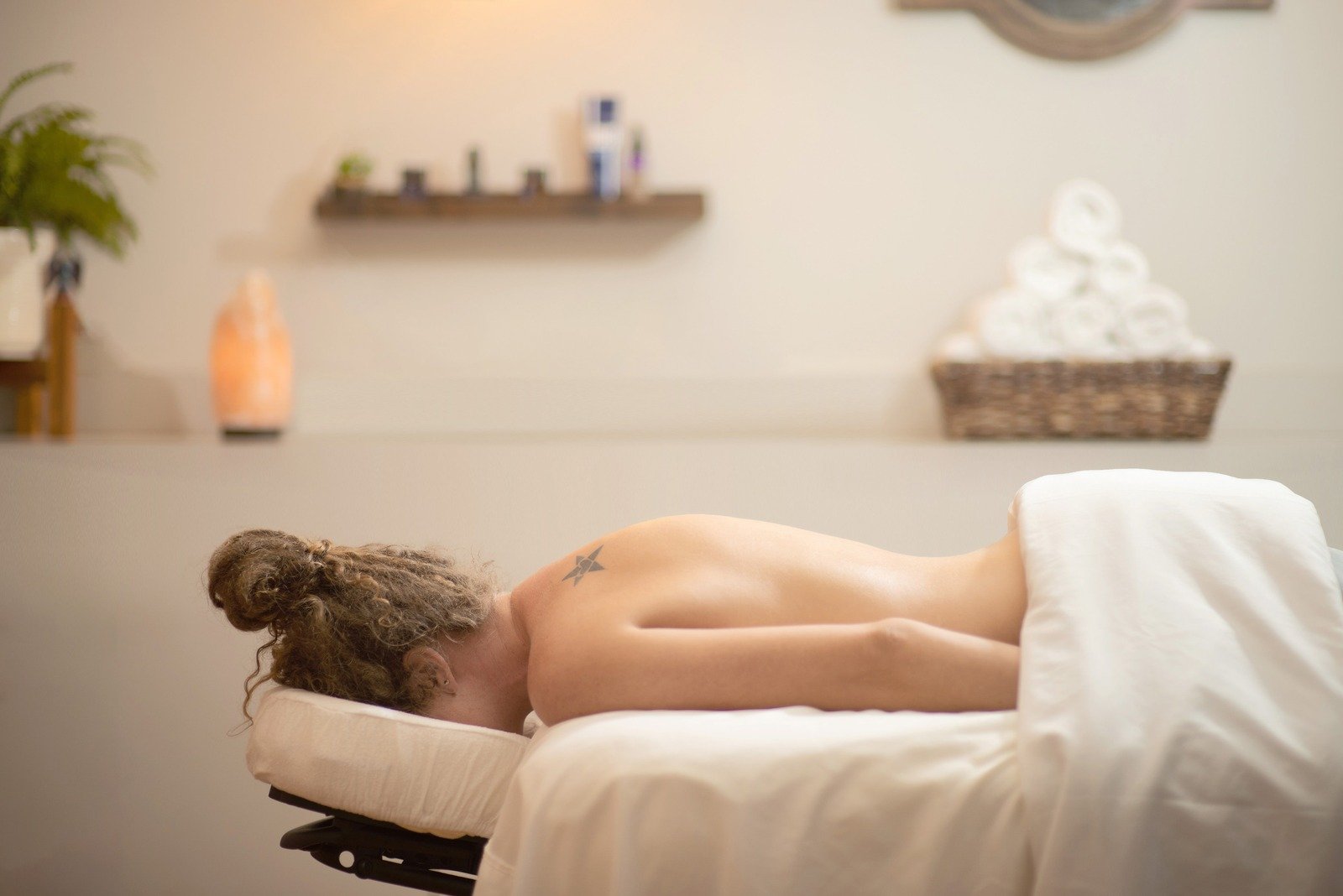
Every session at Soothe & Sage includes cupping, red light therapy, salt stones, steamed towels, aromatherapy, and warm packs at one flat rate with no add-on fees. Your garden needs tending — so does your body.