
Grief isn't just an emotional experience. It's a full-body event. The loss of someone you love — or the loss of a relationship, a career, a home, a chapter of life, or the future you expected — creates physical changes that are as real and as measurable as any injury. The chest tightens in what we call heartache because the pectoral muscles and intercostals literally contract around the heart and lungs, restricting the breath that emotional processing requires. The shoulders round forward and elevate in a protective posture, as if the body is trying to guard the heart from further pain. The jaw clenches from the sustained tension of holding emotions in. The stomach churns, appetite disappears or becomes erratic, and sleep fractures into something that provides neither rest nor escape.
The nervous system enters a state of sustained activation that resembles chronic stress but carries a quality that pure stress doesn't have — the quality of absence. The body that was accustomed to the presence of someone, to the rhythm of a familiar life, to the predictability of a known future, is now operating in a landscape where those reference points have been removed. This disorientation creates a low-grade sympathetic activation that the body can't resolve through the normal stress-and-recovery cycle because the stressor — the loss itself — doesn't resolve. It simply becomes the new reality that the nervous system has to learn to live within, and that learning takes enormous energy.
Massage provides something that grief desperately needs and rarely receives: physical comfort without expectation. Talk therapy helps process the emotional content of loss. Support from friends and family provides social connection. But the body itself — the body that aches, that can't sleep, that tightens around the chest, that holds tension it doesn't know how to release — needs direct physical attention. Therapeutic touch releases the chest muscles that restrict breathing, softens the shoulder guarding, relaxes the jaw, and activates the parasympathetic state that grief's sustained sympathetic activation prevents. The oxytocin release during massage provides the neurochemical sense of safety and human connection that loss disrupts at the most fundamental level.
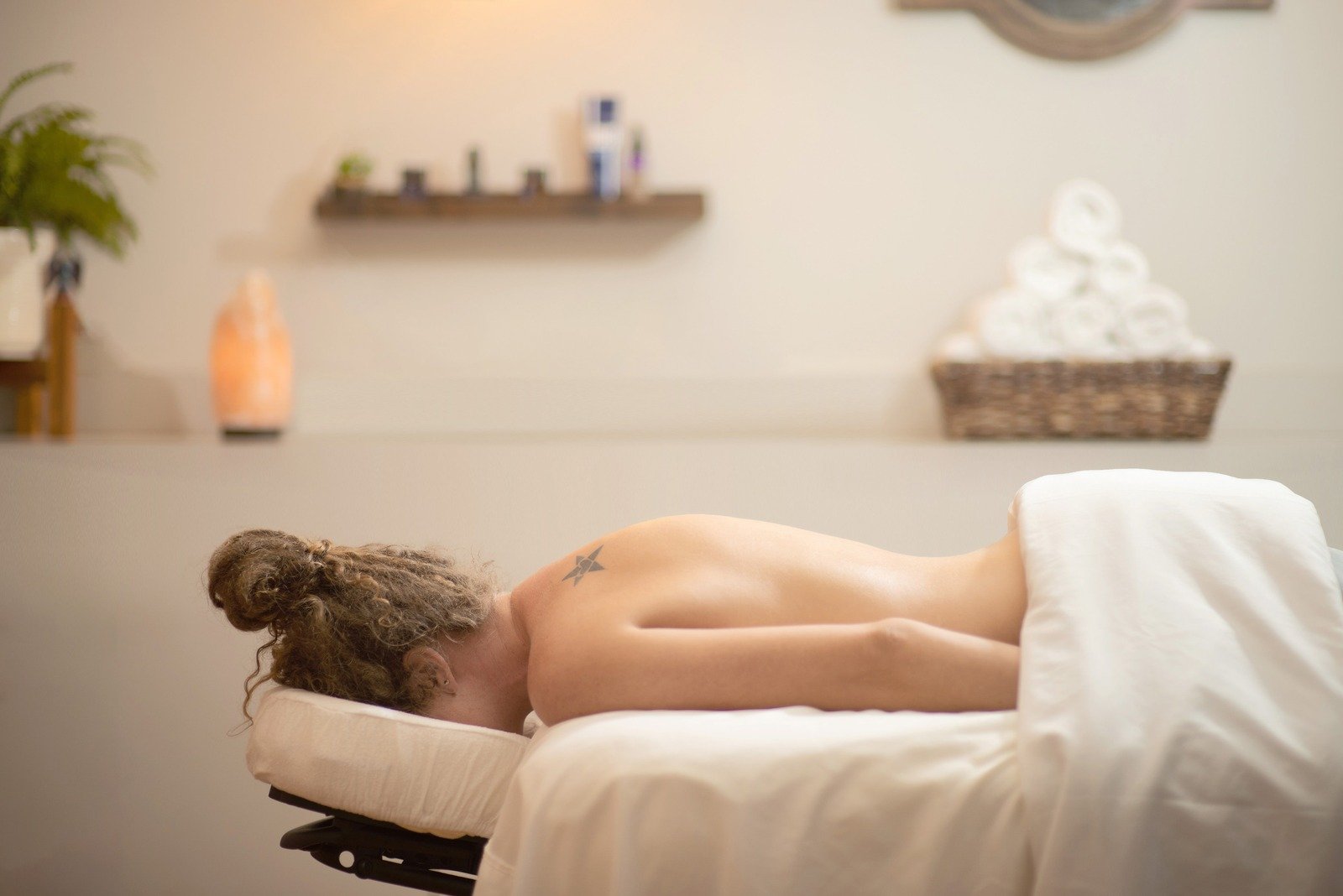
Many grieving clients describe their massage session as the first time they've actually rested since their loss. Not distracted, not medicated, not numb — but genuinely resting in a body that has been carrying the weight of grief without pause. The warmth of Himalayan salt stones, the gentle pull of cupping, the soothing scent of aromatherapy, and the sustained human contact of skilled therapeutic touch create an environment where the body can temporarily put down what it's been carrying and simply receive care. That's not a cure for grief. But it's sustenance for the journey through it.
Every session at Soothe & Sage includes cupping, red light therapy, salt stones, steamed towels, aromatherapy, and warm packs at one flat rate with no add-on fees. You don't have to carry this alone.