
There's nothing like standing at a summit, looking out across the Inland Northwest, and feeling the kind of alive that only earned elevation can provide. The trails around Spokane — from the Dishman Hills to Riverside State Park, from Mount Spokane to the mountains of North Idaho — offer some of the most rewarding hiking in the Pacific Northwest. But every foot of elevation gain and every mile of trail takes a physical toll that your body doesn't forget, and the difference between hikers who sustain their passion all season and those who burn out by July is almost always recovery.
Hiking creates unique physical demands that differ from most other forms of exercise. The uphill portions overload the quads, calves, and glutes through sustained concentric effort — your muscles are working hard under load for extended periods, generating metabolic waste faster than blood flow can clear it. The downhill portions are even harder on the body because they load the quads, knees, and ankles eccentrically — the muscles lengthen under load, which creates significantly more micro-damage to muscle fibers than concentric contraction. This is why your quads are more sore from downhill than uphill, and why knee pain after steep descents is one of the most common complaints among hikers.
Add a pack to the equation and the demands multiply. Even a day pack adds spinal compression, shoulder strain from the straps, and changes your center of gravity in ways that force your core, low back, and hips to work harder with every step. Backpacking trips with heavier loads intensify all of these effects dramatically. And the terrain itself — uneven footing, rocks, roots, stream crossings — demands constant proprioceptive adjustments from your ankles, knees, and hips that tire the stabilizing muscles in ways that flat-ground exercise doesn't.
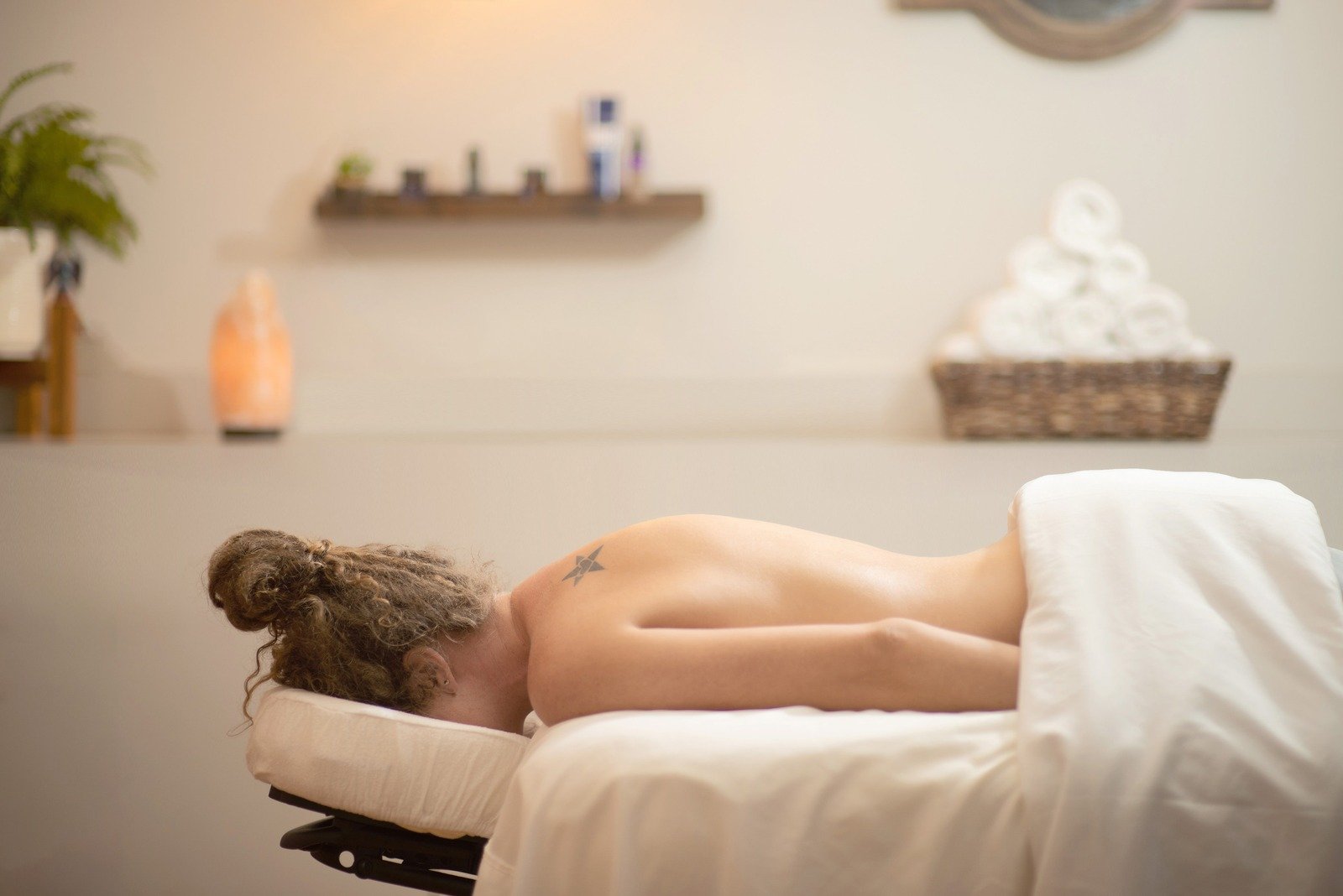
My husband, our four dogs, and I spend as much time on trails as possible, so I understand these demands from personal experience. When I work with hikers, I focus on the areas the trail demands the most from: the quads and IT bands for uphill and downhill loading, the calves and feet for the sustained effort of uneven terrain, the low back and hips for pack weight and stability demands, and the shoulders and upper back for pack carriage. Cupping decompresses tissue that pack weight and sustained effort have compressed. Red light therapy accelerates the cellular repair of the micro-damage that downhill hiking creates.
Every session at Soothe & Sage includes cupping, red light therapy, salt stones, steamed towels, aromatherapy, and warm packs at one flat rate with no add-on fees. Keep exploring the trails that make Spokane extraordinary.