
Pregnancy hip pain is one of those symptoms that invades everything. It hurts to walk. It hurts to climb stairs. It hurts to roll over in bed. It hurts to stand up from a chair. And perhaps most cruelly, it hurts to sleep — because you can only sleep on your side, and side-sleeping compresses the very joints that are already screaming for relief. By the third trimester, many women describe their hip pain as a constant grinding, burning, or aching that never fully goes away, no matter what position they try.
The root cause is a combination of hormonal and mechanical factors that create a perfect storm of joint instability and muscular overcompensation. Relaxin — the hormone that loosens ligaments to prepare the pelvis for birth — doesn't just affect the pelvis. It loosens connective tissue throughout the body, but the hips and pelvis bear the most dramatic consequences. The sacroiliac joints, which are normally nearly immobile, develop significant movement. The pubic symphysis widens. The entire pelvic ring becomes less stable, and the muscles surrounding these joints — particularly the gluteus medius, piriformis, and deep rotators — must work overtime to provide the stability that the ligaments can no longer offer.
These overworked muscles become chronically tight, developing trigger points and restricting blood flow. The gluteus medius, which normally fires during walking to stabilize the pelvis, becomes hypertonic and painful. The piriformis tightens and can compress the sciatic nerve. The TFL and IT band become taut. The hip flexors shorten from postural changes. The result is a hip that feels locked up, grinding, and painful from every direction — too loose at the joint level and too tight at the muscular level simultaneously.
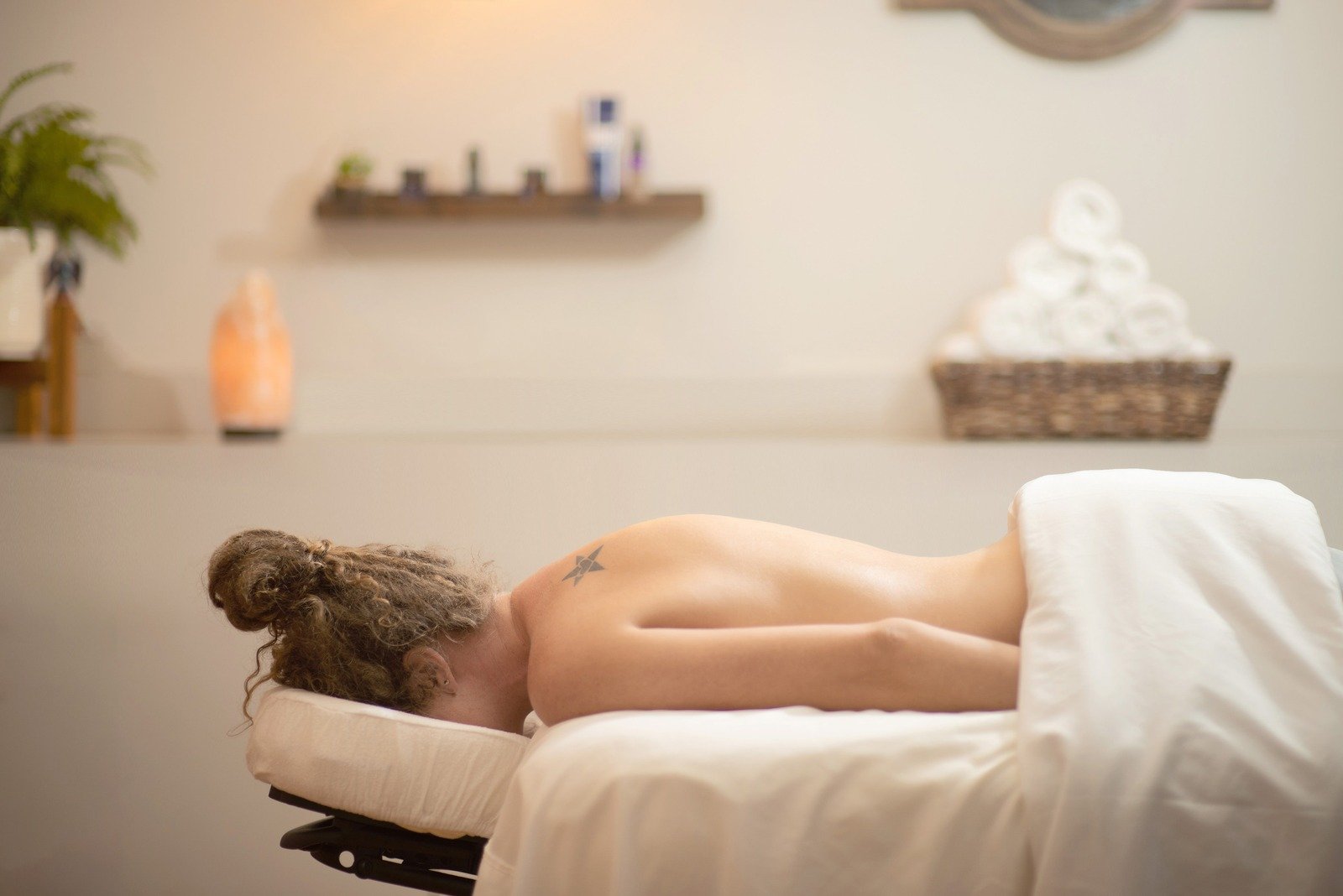
At Soothe & Sage, I address pregnancy hip pain with a level of access that most prenatal massage cannot achieve. The full body prenatal cushion allows you to lie face-down, giving me direct access to the gluteal muscles, piriformis, deep rotators, and IT band at the angles needed for effective release. In a side-lying position, the top hip is accessible but the weight-bearing hip — often the more painful one — is compressed against the table. Face-down positioning lets me work both sides equally and thoroughly.
Treatment targets the entire hip complex: the gluteus medius and minimus (the primary stabilizers), the piriformis and deep rotators (which tighten around the sciatic nerve), the TFL and IT band (which restrict lateral movement), and the hip flexors (which pull the pelvis forward and compress the SI joints). Red light therapy reduces the inflammation in the joint capsules and surrounding tissue, addressing both the muscular and inflammatory components of pregnancy hip pain. Many clients report significantly better sleep on massage days because the hip tension that makes side-lying so painful has been released.