
Swimming looks effortless from the pool deck. Beneath the surface, it's one of the most physically demanding and repetitive sports the human body can perform. A competitive swimmer may execute 1,500 to 3,000 shoulder rotations in a single practice session. A dedicated lap swimmer at one of Spokane's pools might accumulate thousands of strokes per week. Every single one of those strokes demands a full overhead reach, powerful pull through the water, and rapid recovery — a cycle that loads the shoulders, lats, chest, and upper back with a volume of repetitive stress that few other sports can match.
The shoulder bears the heaviest burden. During the catch and pull phases of freestyle, the subscapularis, pectoralis major, and latissimus dorsi generate the power that propels the body through water. During the recovery phase, the rotator cuff must stabilize the humeral head in the socket while the arm swings forward overhead. This creates a fundamental muscular imbalance: the powerful internal rotators become overdeveloped and chronically tight, while the smaller external rotators fatigue from the constant stabilization demands. Over time, this imbalance pulls the humerus forward in the socket, reducing the subacromial space and creating the impingement known as swimmer's shoulder — the most common injury in competitive swimming.
But the demands extend well beyond the shoulder. The latissimus dorsi — the large muscles of the mid and lower back — are the primary power generators for every pulling stroke. They develop tremendous tension from the sustained loading of moving the body through water's resistance. The thoracic spine stiffens from the sustained flexion of streamline position, losing the extension and rotation that healthy movement requires. The neck strains from the repeated turning to breathe in freestyle, creating asymmetric tension patterns that produce headaches and cervical stiffness. Even the ankles and feet fatigue from the sustained plantar flexion of kicking.
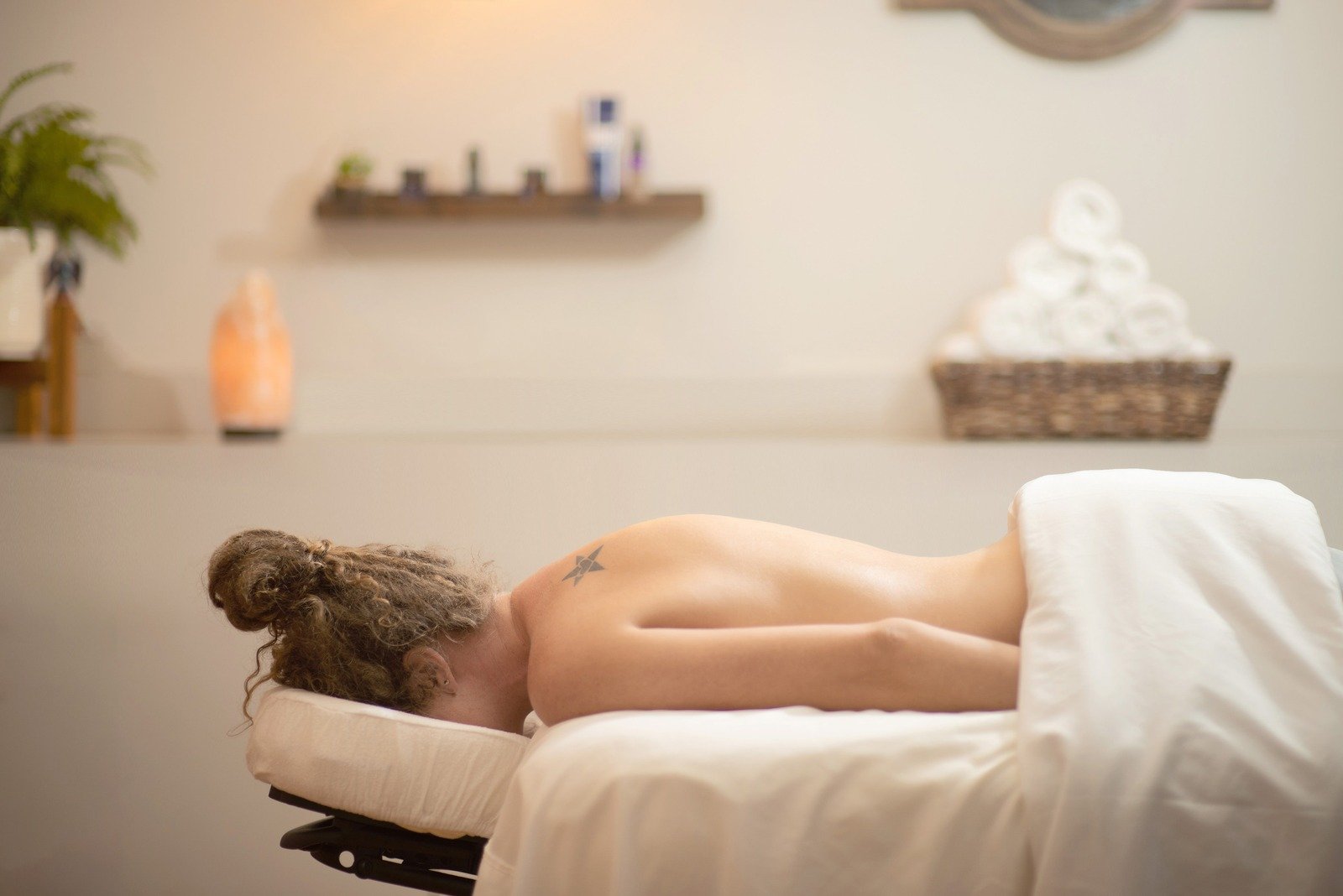
When I work with swimmers, I focus on restoring the muscular balance that the sport systematically dismantles. The overdeveloped internal rotators — lats, pecs, and subscapularis — are released to restore subacromial space and prevent impingement. The thoracic spine is decompressed and mobilized through targeted massage and cupping. The neck is addressed for the asymmetric tension that breathing patterns create. Red light therapy accelerates the cellular repair of the micro-damaged shoulder tissue that thousands of repetitions produce.
Every session at Soothe & Sage includes cupping, red light therapy, salt stones, steamed towels, aromatherapy, and warm packs at one flat rate with no add-on fees. Keep swimming strong — let your body recover as hard as it trains.