
Teaching is one of the most physically and emotionally demanding professions, and it shows up in the body in ways that most people outside of education don't understand. You stand for hours, often on hard classroom floors. You bend to student level dozens of times a day. You project your voice across noisy rooms, creating tension in your jaw, throat, neck, and upper back that builds invisibly throughout the week. You carry heavy bags of materials, haul supplies, and contort yourself into small chairs and student desks. And then you go home and spend hours grading in hunched positions that undo whatever your body managed to recover during sleep. The physical demands alone would be enough — but you're also carrying the emotional weight of your students' struggles, administrative pressure, and the relentless pace of the school year.
The teachers I work with here in Spokane share remarkably similar patterns. The neck and upper shoulders carry the tension of voice projection and stress — the upper traps, levator scapulae, and scalenes are almost universally tight. The low back aches from standing all day on hard surfaces and from the constant bending to student level. The feet and calves are exhausted from sustained weight-bearing. The forearms and hands are tight from writing, typing, and grading. And the jaw — often overlooked — holds the stress of keeping composure through difficult classroom moments, parent conferences, and the emotional labor of caring about kids who are struggling.
What makes teacher pain especially challenging is the cycle it creates. You can't call in sick because there aren't enough substitutes. You can't sit down because your students need you moving through the room. You can't take breaks when your body needs them because the bell schedule doesn't accommodate physical recovery. So the tension accumulates, the pain intensifies, and by winter break you're running on fumes. By spring, the school year feels like it will never end. I understand this cycle because I see it in client after client throughout the school year, and the transformation that happens when teachers start receiving regular massage is remarkable.
Red light therapy boosts serotonin and dopamine naturally — the neurotransmitters that burnout depletes. Warm salt stones deliver mineral-rich comfort to bodies that have been standing and carrying all day. Cupping decompresses the upper back and shoulders that teaching posture compresses. Aromatherapy calms the hypervigilant nervous system that classroom management demands.
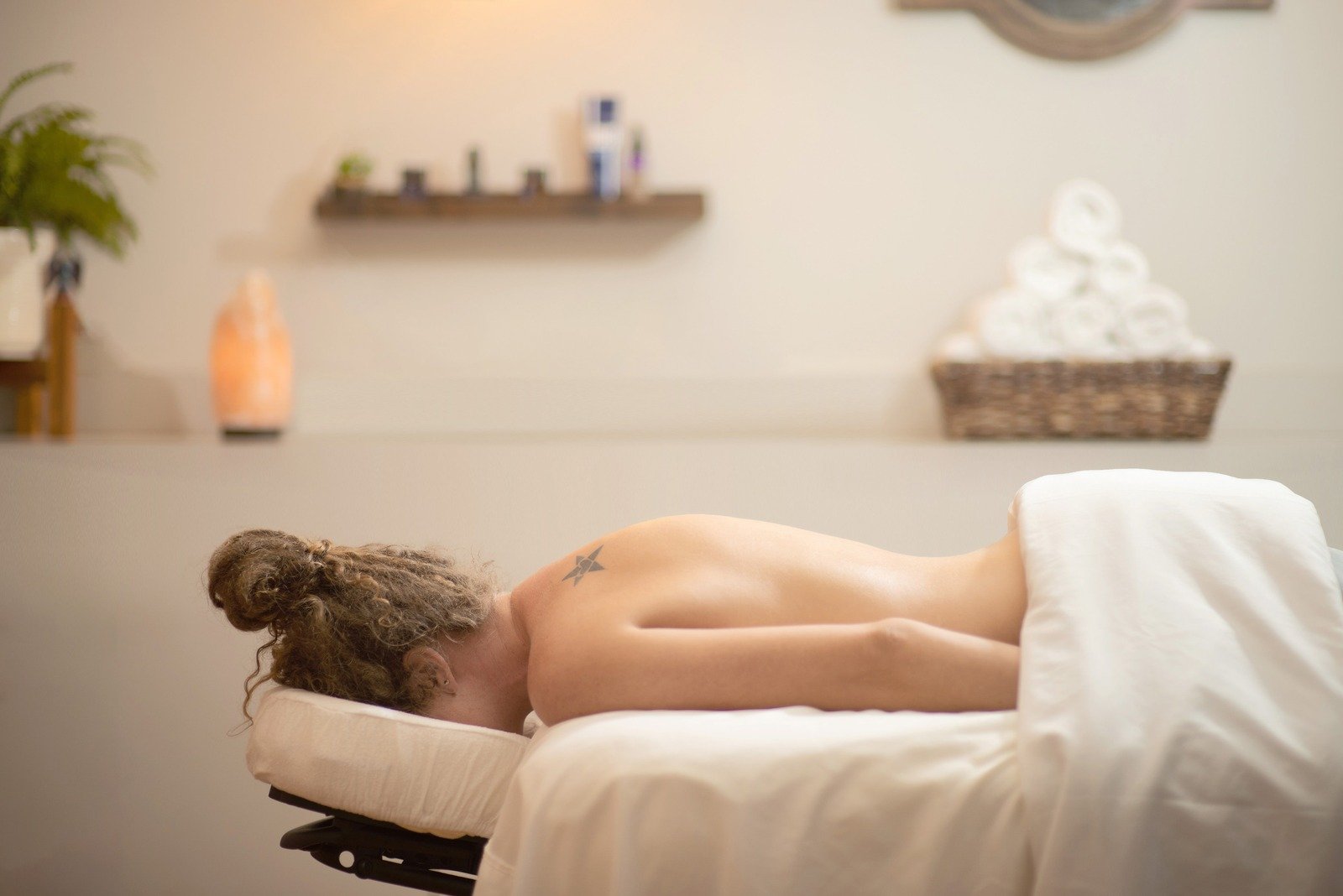
Every session at Soothe & Sage includes cupping, red light therapy, salt stones, steamed towels, aromatherapy, and warm packs at one flat rate with no add-on fees. You pour into your students every day — let someone pour into you.