
Pregnancy is the most physically demanding thing most women's bodies will ever do. Every system adapts — cardiovascular output increases by 40-50%, blood volume expands by nearly 50%, the ribcage widens, the pelvis shifts, ligaments loosen under the influence of relaxin, and the center of gravity migrates forward as the baby grows. These adaptations are miraculous and necessary, but they create physical demands that extend far beyond the hour you spend on the massage table. Building a comprehensive self-care practice around prenatal massage creates a support system that addresses what's happening in your body every day — not just during your appointment.
Hydration becomes critically important during pregnancy. Blood volume expansion requires significantly more water than your pre-pregnancy body needed. Dehydration during pregnancy intensifies muscle cramps, increases Braxton Hicks contractions, worsens swelling by concentrating sodium, and reduces the amniotic fluid that cushions your baby. Most pregnant women need 10-12 cups of water daily — more during Spokane's dry summers or if you're staying active. The water you drink between massage sessions supports the lymphatic drainage that massage promotes, helps flush the metabolic waste that tissue work releases, and maintains the fluid balance that reduces pregnancy-related swelling.
Gentle daily movement complements massage by maintaining the flexibility and circulation that your changing body needs. Walking remains one of the best exercises throughout pregnancy — it promotes circulation, supports cardiovascular fitness, and provides the gentle rhythmic movement that helps the baby settle into optimal positioning. Cat-cow stretches keep the spine mobile as the growing belly shifts your posture. Hip circles and gentle hip openers maintain the pelvic mobility that both pregnancy comfort and birth preparation require. The key is consistency and gentleness — pregnancy isn't the time for intensity, but daily gentle movement compounds with regular massage to produce comfort that neither approach achieves alone.
Sleep support becomes increasingly challenging as pregnancy progresses. Side-sleeping with a pillow between the knees reduces hip and low back strain by maintaining pelvic alignment. A pillow under the belly prevents the uterus from pulling on the spinal ligaments. Elevation of the upper body can reduce the heartburn and breathing difficulty that third trimester compression creates. The serotonin boost from regular massage directly supports sleep quality by providing the precursor to melatonin — meaning your massage sessions are literally helping you sleep better on the nights between appointments.
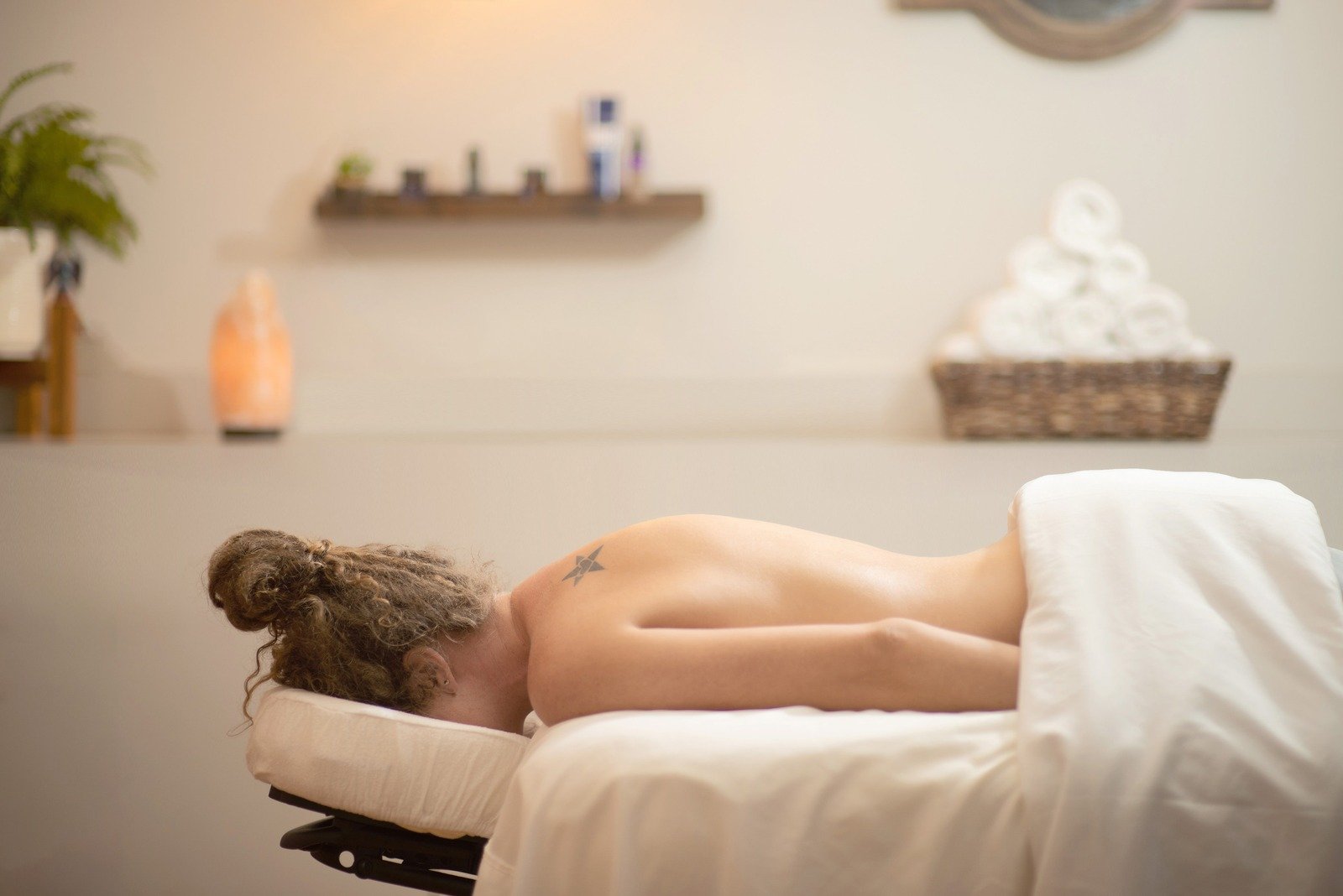
At Soothe & Sage, prenatal massage uses a full body prenatal cushion that allows face-down positioning — something most massage studios can't offer. Every session includes cupping, red light therapy, salt stones, steamed towels, aromatherapy, and warm packs at one flat rate with no add-on fees. You're growing a life — take care of yours.