
You've tried every pillow on the market. Memory foam, buckwheat, contour, flat, firm, soft — and none of them fix the problem. You spend the first thirty minutes in bed adjusting, repositioning, flipping from side to side, trying to find the angle where your neck doesn't ache, your head doesn't throb, and your shoulders don't burn. The issue isn't your pillow. The issue is that the muscles controlling your cervical spine are so chronically tight that no position can accommodate them comfortably. Until those muscles release, no pillow will solve the problem.
The neck is arguably the most sleep-critical region of the body, and its connection to sleep quality is more complex than simple positional discomfort. The suboccipital muscles — four small muscles at the base of your skull — are among the most densely innervated muscles in the body, containing more proprioceptive nerve endings per gram than almost any other tissue. When these muscles are tight (from screen time, stress, or posture), they create tension headaches, visual disturbances, and a persistent sense of head pressure that makes relaxation impossible. They also compress the greater occipital nerve, creating referred pain that wraps from the back of the skull over to the forehead and behind the eyes.
The upper trapezius muscles — the thick muscles spanning from your shoulders to your skull — are innervated by the spinal accessory nerve, which shares neural pathways with the vagus nerve. This anatomical connection means that chronically tight upper traps don't just cause shoulder pain — they interfere with vagal tone, making it harder for your body to activate the parasympathetic (rest-and-digest) state required for sleep onset. When your upper traps are locked in protective tension, your nervous system reads it as a threat signal, maintaining the sympathetic activation that prevents deep sleep.
The levator scapulae — the muscle connecting your shoulder blade to the upper cervical vertebrae — is responsible for the "I slept wrong" sensation that haunts millions of people. But you didn't sleep wrong; this muscle was already in spasm before you lay down, and lying in any position sustained the compression. The SCM (sternocleidomastoid) creates referred pain to the forehead and behind the eyes when trigger points develop, mimicking sinus headaches that keep people awake. The scalenes, tucked along the sides of the neck, compress the brachial plexus nerves when tight, causing the arm numbness and tingling that wakes people in the middle of the night.
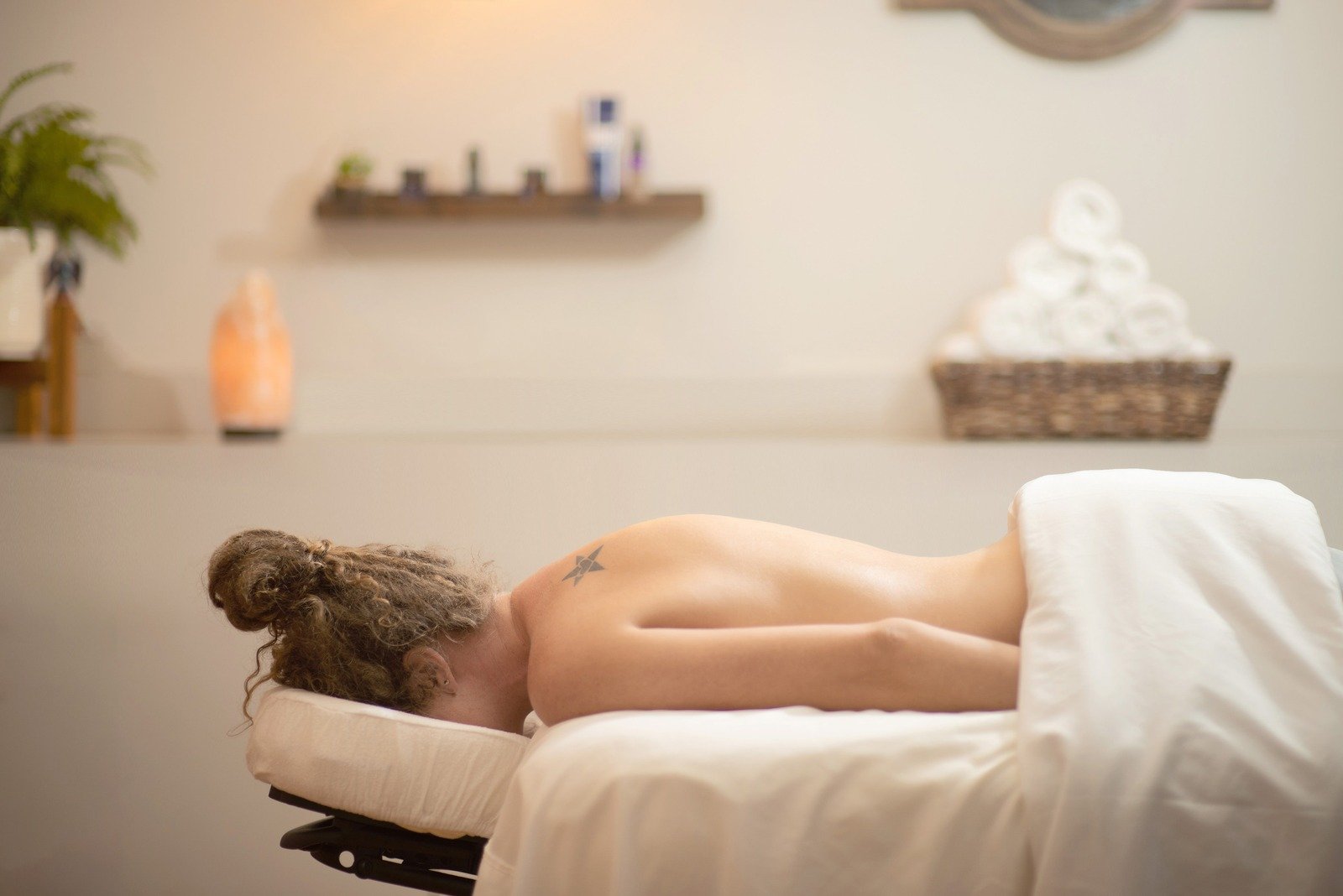
Professional neck massage addresses all of these simultaneously. Suboccipital release eliminates the skull-base tension headaches. Upper trap work reduces sympathetic nervous system activation. Levator scapulae treatment prevents the positional pain cycle. SCM and scalene work eliminates referred pain and nerve compression. At Soothe & Sage, warm Himalayan salt stones deliver deep heat directly to tight cervical muscles, and red light therapy reduces the inflammation that perpetuates chronic neck tension. Every session includes these at one flat rate — no add-on fees for the specific attention your neck needs.