
Sciatica during pregnancy is one of the most debilitating symptoms a woman can experience. The shooting, burning pain that radiates from deep in the buttock down the back of the leg can make walking, sitting, sleeping, and simply existing feel unbearable. For many women, it strikes in the second or third trimester and intensifies as the pregnancy progresses — right when pain medication options are most limited. Massage is one of the few treatments that can safely and effectively address the root cause of pregnancy sciatica rather than just numbing the symptoms.
Most pregnancy sciatica is caused by the piriformis muscle — a small but powerful rotator deep in the buttock that sits directly over (and in some people, wraps around) the sciatic nerve. When pregnancy shifts pelvic alignment, loosens the SI joint, and changes gait patterns, the piriformis compensates by tightening. As it tightens, it compresses the sciatic nerve against the bone beneath it, creating the characteristic shooting, burning, or electric pain that can radiate all the way to the foot.
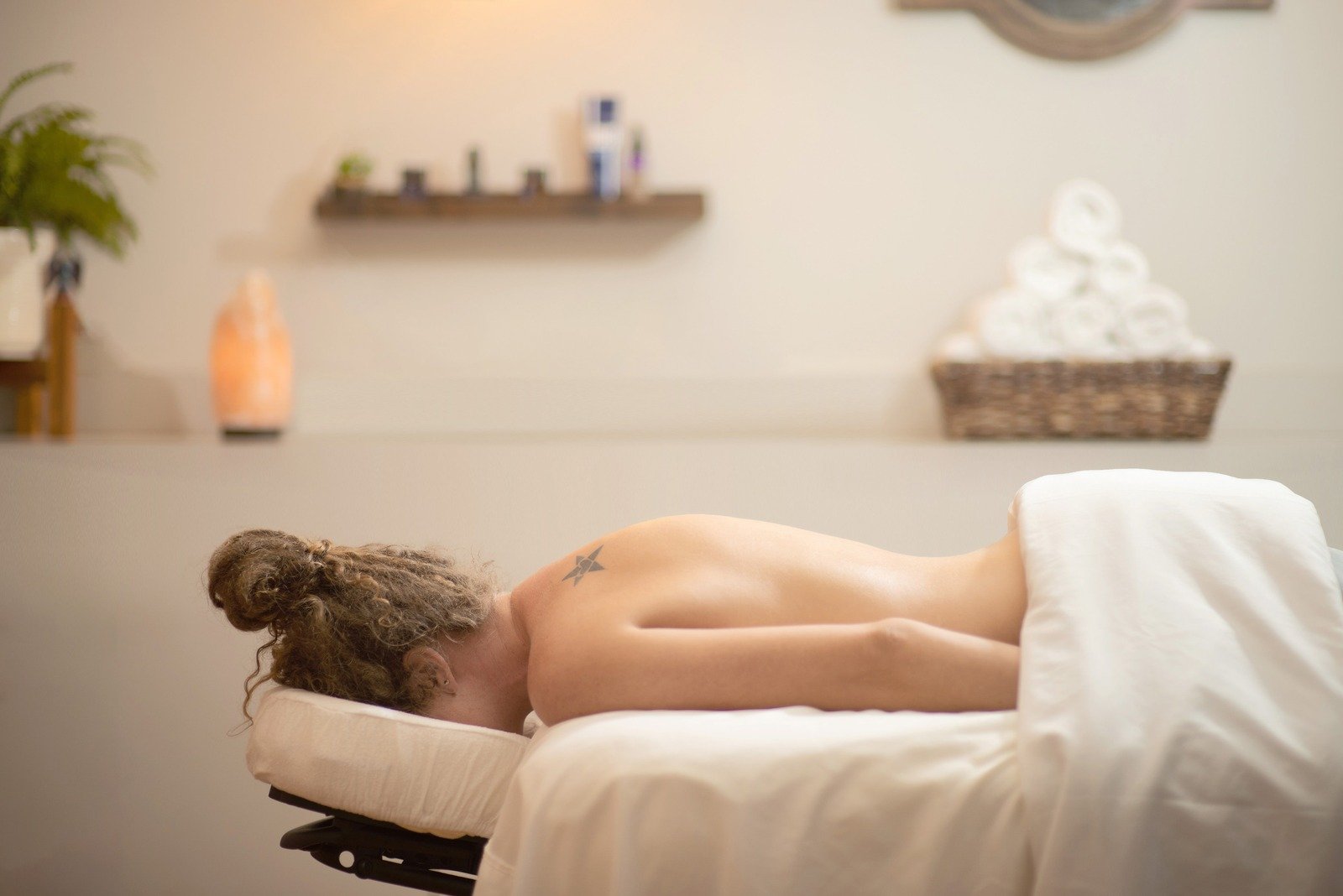
The challenge with pregnancy sciatica is access. The piriformis sits deep beneath the gluteus maximus, and reaching it effectively requires the client to be in a position that allows focused, sustained pressure into the deep gluteal region. This is nearly impossible in a side-lying position — which is what most prenatal massage therapists are limited to. At Soothe & Sage, the full body prenatal cushion allows you to lie face-down with full belly support, giving me direct access to the piriformis and surrounding deep rotators at exactly the angle needed to release sciatic compression.
Treatment involves slow, sustained pressure into the piriformis and the other deep lateral rotators (the obturator internus, gemelli, and quadratus femoris) that contribute to sciatic compression. I also address the gluteus medius and minimus, which often develop trigger points that refer pain down the leg in patterns that mimic or compound true sciatic symptoms. The surrounding musculature — hamstrings, IT band, and low back — gets attention too, because chronic sciatic pain creates compensatory tension throughout the entire posterior chain.
Red light therapy, included with every session, reduces the nerve inflammation that makes sciatica so painful. When the sciatic nerve is compressed, it becomes inflamed and hypersensitive — even after the compression is released, residual inflammation can keep pain signals firing. Red light penetrates deep enough to reach the irritated nerve tissue, supporting the anti-inflammatory process and helping the nerve calm down faster. Many clients report that the combination of deep gluteal release plus red light therapy provides relief that lasts significantly longer than massage alone.