
The cruelest irony of sleep anxiety is that the harder you try to sleep, the more impossible it becomes. You lie in bed exhausted, and instead of drifting off, your brain launches into overdrive — replaying the day's conversations, calculating tomorrow's demands, generating catastrophic scenarios about projects, relationships, or health. Your heart beats faster in the dark. Your jaw clenches without your permission. Your shoulders creep toward your ears. The clock reads 1:47 AM, and now you're anxious about not sleeping, which makes you even less likely to sleep. The cycle feeds itself, night after night.
This isn't a willpower problem. Sleep anxiety is a nervous system problem. When you carry chronic stress, your sympathetic nervous system — the fight-or-flight branch designed for immediate physical danger — stays activated even when you're safe in bed. Cortisol and adrenaline circulate through your bloodstream, keeping your brain in threat-scanning mode. Your muscles remain partially contracted, ready to react. Your breathing stays shallow and chest-centered. Every physiological system in your body is optimized for alertness, and no amount of deep breathing apps or herbal tea can fully override a nervous system that believes it's under threat.
Massage therapy is one of the most powerful interventions for anxiety-driven insomnia because it communicates with the nervous system through the only language it truly understands: physical touch. When skilled hands apply sustained, moderate pressure to your body, mechanoreceptors in your skin send signals directly to the vagus nerve — the master switch of the parasympathetic nervous system. The vagus nerve triggers a cascade: heart rate slows, blood pressure drops, cortisol production decreases, and serotonin and dopamine increase. This isn't relaxation as a concept — it's a measurable physiological shift that happens regardless of whether your mind cooperates.
Anxiety lives in specific places in the body. The jaw (clenching and grinding), the shoulders (protective elevation), the neck (hypervigilant scanning), the chest and diaphragm (restricted breathing), and the hip flexors (the body's primary "flee" muscles) all hold anxiety patterns that reinforce the stress cycle. Releasing these physical patterns doesn't just feel good — it removes the feedback loop that tells your brain danger is present. When the jaw unclenches, the shoulders drop, and the diaphragm softens, the brain receives the signal that the threat has passed and begins shifting from alert mode toward sleep readiness.
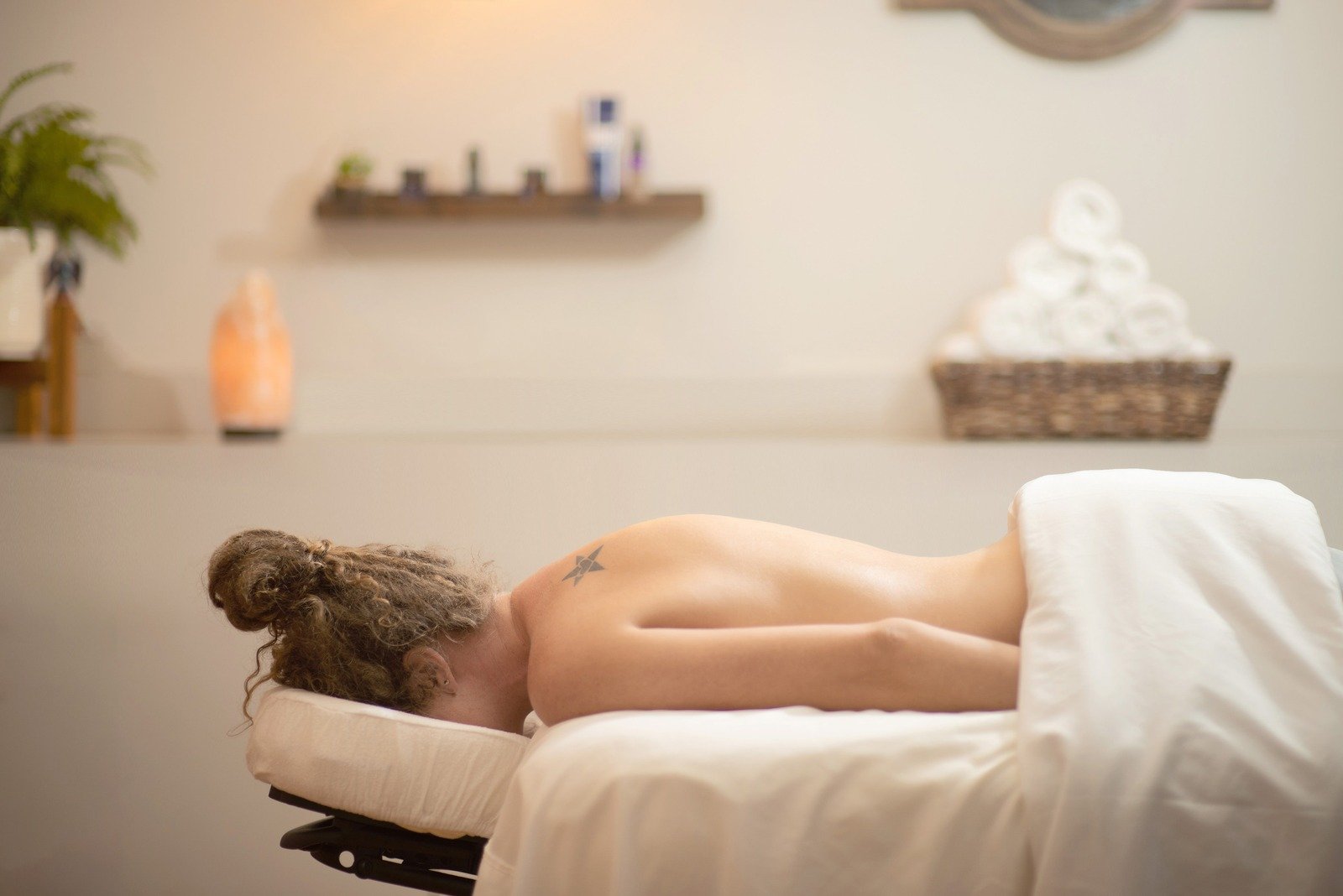
At Soothe & Sage, every session creates a complete sensory environment for nervous system calming. Warm salt stones provide deep, grounding heat. Steamed towels soften tense tissue. Aromatherapy engages the olfactory-limbic pathway — the direct line between scent and your brain's emotional regulation center. Red light therapy naturally boosts serotonin, the precursor to melatonin (your sleep hormone). Together with skilled therapeutic touch, these create the conditions for your nervous system to finally stand down — and your body to remember what it feels like to simply rest.